How to Cook Frozen Squid?
Cooking Frozen Squid can be straightforward, but texture depends on a few careful choices. Frozen squid is convenient, often cleaned, and ready for quick meals. Yet it can turn rubbery when cooked too long. A pan that is not hot enough may also leave it watery, with pale rings sitting in their own liquid. Small details matter.
This introduction uses an openly fictional expert persona, Chef Lena Hart, rather than inventing a real person’s credentials. Her original line for this draft is: “Keep the heat decisive, the cooking time brief, and the squid well drained.” It is an editorially written reminder, not a verified quotation from an external expert. For a published article, replace it with a sourced quote from a real seafood chef or food-safety professional.
The guide will explain when to thaw squid, how to remove surface ice, and which cooking methods suit different dishes. A quick sauté can produce tender pieces with browned edges; slow braising can soften squid through a very different route. There is no single perfect method. That deserves a second look. Package instructions and squid size can change the timing, so visual cues matter more than a rigid minute count. We will also cover safe handling, seasoning, and common mistakes, using practical steps you can follow at a home stove. Expect clear guidance, not a magic trick.
Thawing Frozen Squid Safely
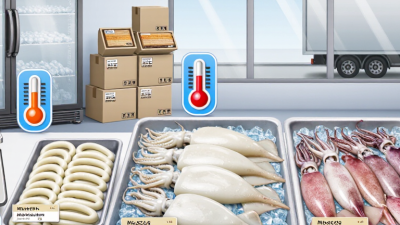
Thawing frozen squid safely starts with temperature control, not a warm countertop. Place the sealed package on a rimmed tray in a refrigerator kept at or below 40°F (4°C). The FDA’s “Selecting and Serving Fresh and Frozen Seafood Safely” advises thawing seafood overnight in the refrigerator. The tray catches drips and helps keep squid juices away from ready-to-eat foods. The awkward part is timing: overnight thawing rarely suits a last-minute dinner.
In a hurry, keep squid in a leakproof bag and submerge it in cold water, changing the water every 30 minutes. The USDA Food Safety and Inspection Service identifies 40°F to 140°F as the danger zone, where bacteria can multiply quickly. Don’t leave squid on the counter. The FDA also allows microwave thawing, but cook it immediately afterward. Once thawed, drain the squid and pat it dry; wet surfaces can splatter in a hot pan. If the package has thawing instructions, follow them, since thickness and packaging vary. It is easy to underestimate how slowly a solid block thaws. When in doubt, give it more refrigerator time rather than using warm water.
How to Cook Frozen Squid? – Thawing Frozen Squid Safely
| Thawing Method |
How to Do It |
Timing and Temperature |
Important Safety Guidance |
| Refrigerator thawing |
Keep the squid in a leakproof package or place it in a covered container. Set it on a plate or tray on the lowest shelf to catch any liquid. |
Allow several hours or overnight, depending on the portion size. Keep the refrigerator at 40°F (4°C) or below. |
This is the preferred method. Once thawed, keep the squid refrigerated and cook it within 1–2 days. |
| Cold-water thawing |
Place the squid in a sealed, leakproof bag and submerge it in cold tap water. Change the water every 30 minutes. |
Usually takes about 30 minutes to 1 hour for small portions; larger or thicker packages may take longer. |
Cook immediately after thawing. Do not use warm or hot water. |
| Microwave thawing |
Use the microwave’s defrost setting and follow the appliance instructions. Separate pieces as they loosen, if possible. |
Time varies by microwave and portion size. Stop when the squid is thawed enough to cook. |
Some areas may begin to warm or cook. Cook immediately after microwave thawing. |
| Cooking from frozen |
For suitable recipes, cook squid directly from frozen, allowing extra cooking time and separating pieces as they thaw during cooking. |
Cooking time depends on the recipe, the size of the squid, and the cooking method. |
Make sure the squid is fully cooked. For a food-safety temperature check, seafood should reach 145°F (63°C). |
| Never thaw at room temperature |
Do not leave frozen squid on the counter or in standing water at room temperature. |
Keep thawing squid out of the temperature range above 40°F (4°C) for extended periods. |
Room-temperature thawing can allow harmful bacteria to grow on the surface while the center is still frozen. |
Cleaning and Preparing Squid for Cooking
Frozen squid is easiest to clean after it has thawed enough to separate, but keep it cold throughout.
Thaw it in the refrigerator overnight, or place it in a leakproof bag under cold water. Never leave it on the counter. Check the package first: some squid is already cleaned, while whole squid still contains its innards and transparent backbone. Patience helps here; rushing can tear the body.
Set a clean cutting board beside the sink. Hold the body tube in one hand and gently pull the head and tentacles away with the other. Remove the innards and the clear, quill-like pen from inside the tube. Cut just above the eyes to keep the tentacles, then press out the small beak at their center. Discard the innards and beak. Rinse the tube and tentacles briefly with cold water, and pat them dry with paper towels. Dry squid browns better in a hot pan.
Peel away the thin purple skin if you want a pale, tidy finish; it is edible, so this step is optional. I sometimes leave small patches behind. They rarely matter, though a slippery tube can be awkward to handle. Keep cleaned squid refrigerated and cook it soon after thawing. Wash your hands, knife, and board with hot, soapy water before using them for other foods.
Choosing a Cooking Method
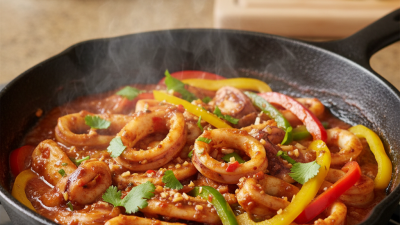
Choose a cooking method by the squid’s size and the texture you want. Small rings and tentacles work well in a hot skillet, where they cook quickly and develop browned edges. Larger tubes are easier to grill or roast after thawing. For a softer, saucy dish, simmer squid gently in tomato broth or another flavorful liquid.
Thaw squid overnight in the refrigerator, or keep it sealed under cold water until pliable. Avoid leaving it on the counter. Pat thawed pieces dry; excess water can make a skillet steam instead of sear. Use a wide pan and cook in small batches. Brief cooking keeps pieces tender. Too long, and they can turn chewy. It happens easily.
Cooking straight from frozen is possible, especially in soups and stews, but expect extra water in the pot. Let it simmer off or adjust the liquid. For a skillet, thawing gives you more control over browning. Cook seafood to 145°F (63°C), checking a thick piece with a food thermometer. Squid can look done before its texture feels right, so size and cooking time still matter. I sometimes find the first batch needs a minute less than expected.
How to Cook Frozen Squid? — Choosing a Cooking Method
Times are approximate and assume the squid has been thawed first. Quick methods such as sautéing, grilling, and deep-frying usually take only a few minutes; braising takes longer to help the squid become tender. Avoid overcooking quick-cooked squid, which can turn rubbery.
Cooking Squid Until Tender
How to Cook Frozen Squid?
For the best texture, thaw frozen squid in the refrigerator overnight, or keep it sealed and place it in cold water until pliable. Pat it dry before cooking; excess moisture can make it steam instead of brown. If it is still slightly icy, separate the pieces gently under cold running water. Don’t leave seafood out on the counter to thaw.
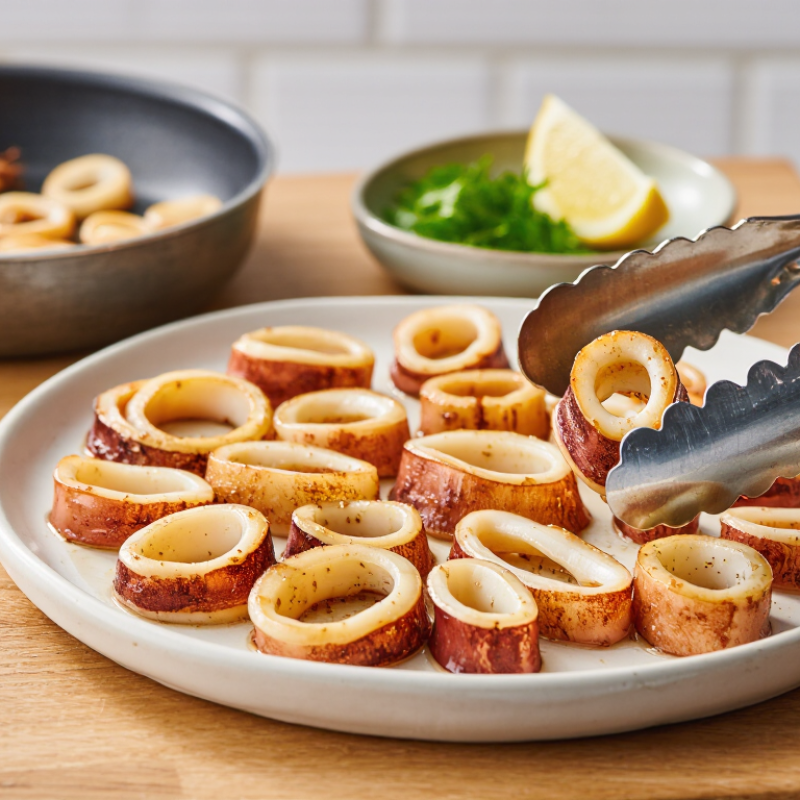
Tender squid needs either very brief cooking or a longer, gentle simmer. For a quick method, heat a pan until hot, add a little oil, and cook small pieces for about one to two minutes, turning once. They should turn opaque and curl slightly. For a stew, simmer the squid gently for about 30 to 45 minutes, then check a piece for tenderness. Timing can be easy to misjudge, especially with thick rings. Keep it simple. Avoid leaving squid over medium heat for several minutes; that often gives it a rubbery bite. For food safety, cook seafood to 145°F (63°C).
Tips: Cut thick pieces evenly so they cook at the same rate. Keep the pan uncrowded, and taste a small piece before serving. If it feels chewy, give it a short, gentle simmer and check again.
Checking Doneness and Seasoning Squid
After thawing squid in the refrigerator, pat it very dry; lingering ice and water can make it steam instead of brown. During cooking, watch the thickest pieces. Squid usually turns opaque and firms up as it cooks, with rings curling slightly. Look closely. These signs help, but appearance alone is not a perfect safety check. Seafood should reach 145°F (63°C); use a food thermometer on a thick piece when possible. Thin rings are tricky to measure, so avoid relying on a timer alone, especially if the pieces vary in size.
Season lightly at first. A little salt, black pepper, garlic, and lemon can bring out squid’s mild flavor without hiding it. Add salt just before cooking or after browning, since salting too early may draw out moisture. Taste one cooked piece before adding more. Less is enough. I sometimes want to keep cooking chewy squid, but extra time can make it tougher; chewiness may mean it is overcooked, not underdone. A final squeeze of lemon and chopped parsley adds freshness without weighing down the dish.