Inquiry
Form loading...
China is a major processing and export base for Frozen Squid Rings, but supplier comparisons need more than a low quoted price. Buyers should check species, size grading, glazing percentage, net weight, packaging, and whether the product is raw or cooked. Small details matter. A ring that looks generous in a carton may contain more ice glaze than expected.
The FAO’s The State of World Fisheries and Aquaculture 2024 reports that global fisheries and aquaculture production reached 223.2 million tonnes in 2022. This figure covers a broad range of aquatic products, not squid rings specifically. FAO FishStat and UN Comtrade can help buyers investigate production and international trade patterns, but neither provides a simple, universal market price for every ring specification. That distinction is easy to miss. Prices also shift with species, season, processing yield, order volume, packaging, and delivery terms.
This guide will help readers assess Chinese suppliers and interpret price offers using practical product and sourcing criteria. Request current quotations, detailed specifications, and recent quality documents before comparing bids. Confirm that quoted weights and glaze are stated consistently. Then compare like with like. Even careful comparisons have limits: public trade data cannot verify a factory’s actual performance or the quality of a particular shipment. A sample and clear written specifications remain useful checks.
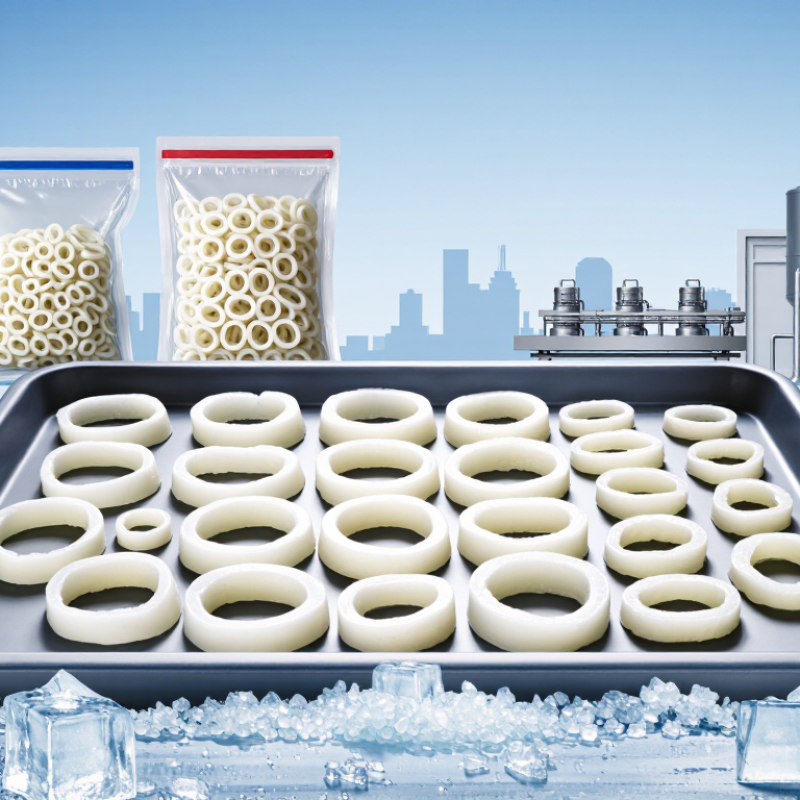
Frozen squid rings can come from different species, and the name alone does not tell buyers what is inside. Illex argentinus often comes from South Atlantic fisheries; Dosidicus gigas is a larger Pacific squid. Species, harvest area, and processing affect flavor, texture, and price. FAO’s SOFIA 2024 report records 223.2 million tonnes of total aquatic production in 2022, including 185.4 million tonnes of aquatic animals. That broad figure is useful market context, but it is not a squid supply estimate. FAO GLOBEFISH market reporting also tracks squid trade and price movements, which can shift with species and availability.
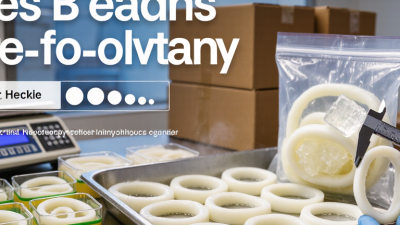
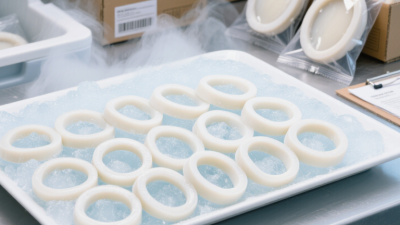
Cut size is commonly shown as ring diameter or pieces per unit weight. Check the supplier’s sizing basis: “large” is not a measurable specification. Glazing is the protective ice layer; compare declared net weight and glazing percentage, not just carton weight. IQF means rings are frozen individually, so they should pour apart rather than form a solid block. They should be stored at a stable frozen temperature, commonly -18°C or colder, following the product specification. Small differences matter.
Tips: Ask for species, origin, ring-size range, glazing percentage, net weight, and a recent product specification. Inspect a thawed sample for uniform rings, excess ice, and texture. One caveat: appearance alone cannot verify species or cold-chain history; request traceability and temperature records.
Buyer’s comparison guide for common frozen squid-ring specifications and supplier categories. Prices below are indicative export-market estimates, not live quotations.
| Supplier Category | Common Species / Raw Material | Typical Ring Specification | Glazing & Net Weight | Indicative FOB China Price (USD/kg) | Typical IQF & Storage Requirements | Useful Buyer Checks |
|---|---|---|---|---|---|---|
| Large seafood processors and exporters | Argentine shortfin squid (Illex argentinus); jumbo flying squid (Dosidicus gigas) | Cut from cleaned tubes; commonly 10–20 mm or 20–40 mm ring widths. Exact sizing depends on tube diameter and cutting specification. | Often 0–20% declared glaze. Confirm whether quoted weight is net of glaze and whether glaze is included in the stated pack weight. | About $3.50–$6.50 | Individually quick frozen; maintain at −18°C or colder during storage and transport. | Request species and harvest area, size tolerance, glaze method, net-weight basis, and a product specification sheet. |
| Mid-sized processors with flexible packing | Japanese flying squid (Todarodes pacificus) or other locally available squid, subject to season and supply | Common food-service or retail cuts include approximately 10–30 mm rings; custom dimensions may be available. | Commonly 10–20% glaze, depending on product and buyer specification. Label gross and net weights separately. | About $4.00–$7.50 | IQF pieces should remain separate after freezing. Finished product is normally held and shipped at −18°C or colder. | Confirm species identity, origin, cut consistency, glazing percentage, packaging format, and allergen labeling. |
| Processors focused on retail-ready packs | Species varies by season and sourcing; rings may be made from whole tubes or prepared squid portions. | Typically calibrated rings for retail packs; ask for the size range, piece count, and permitted percentage of broken rings. | Often offered with a stated glaze percentage. Compare prices on a consistent net product weight basis. | About $4.50–$8.00 | IQF, bagged and packed in master cartons; packaging and label requirements should be agreed before production. | Review the approved artwork, ingredient list, country-of-origin details, lot coding, and pack-weight tolerances. |
| Specialty or smaller-volume seafood suppliers | Species and raw material depend on availability; premium or less common specifications may cost more. | May offer thicker rings, narrow size tolerances, or custom cuts for restaurants and food manufacturers. | Glazing may be customized. Specify the maximum glaze percentage and the method used to verify it. | About $5.00–$9.00 | Ask for the freezing method, production date, cold-chain records, and storage instructions. | Request a pre-shipment sample and clarify minimum order quantity, lead time, and inspection arrangements. |
Price and specification note: Price ranges are broad, indicative estimates in USD per kilogram on an FOB China basis and can change substantially with species, season, raw-material origin, ring size, glaze, processing yield, order volume, packaging, and market conditions. Obtain a current written quotation before purchasing. IQF describes a freezing method; it does not by itself certify product quality or food safety. Buyers should verify applicable import rules, food-safety documentation, temperature controls, and the agreed product specification.