Inquiry
Form loading...
Choosing the best Frozen Squid Tubes suppliers for 2026 requires more than comparing online prices. Buyers must examine species, origin, processing methods, glazing ratios, cold-chain control, and delivery consistency. In practical sourcing, a clean carton means little if the tubes arrive heavily glazed or partially thawed. Details matter.
The FAO’s The State of World Fisheries and Aquaculture 2024 reports that global aquatic animal production reached approximately 185 million tonnes in 2022. This expanding supply base creates more sourcing options, but it also increases quality differences between exporters. FAO FishStat data and UN Comtrade records provide useful references for production and international trade trends, although they do not fully measure supplier reliability. That gap matters.
A serious 2026 supplier review should therefore combine trade data with factory audits, HACCP documentation, BRCGS or IFS certification, laboratory results, and traceability records. Buyers should confirm whether products are wild-caught or farmed, which squid species are used, and how quickly products are frozen after processing. The National Fisheries Institute and FAO both emphasize responsible sourcing, food safety, and supply-chain transparency across seafood markets.
Our comparison focuses on suppliers that can demonstrate stable specifications, export experience, responsive communication, and practical cold-chain performance. A low price may reflect efficient processing. It may also hide inconsistent sizing or excessive ice. No ranking is permanent. Weather, quotas, fuel costs, and regional catch changes can reshape supplier performance during 2026. This guide offers a careful starting point, not a promise of perfection.
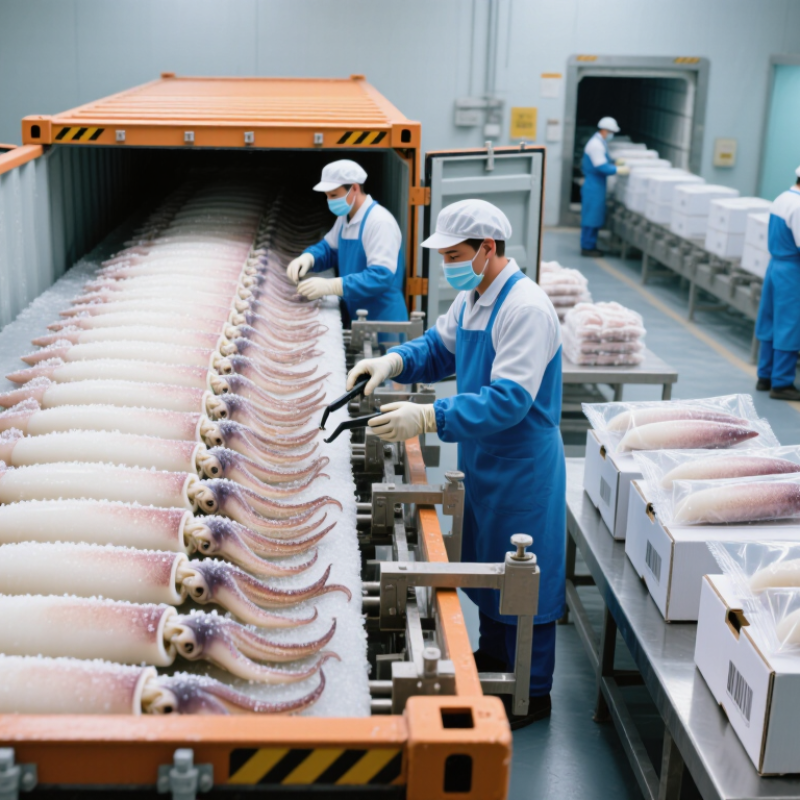
A reliable frozen squid tubes supplier in 2026 must prove more than competitive pricing. FAO’s State of World Fisheries and Aquaculture 2024 reported 185.4 million tonnes of aquatic animal production in 2022. About 89% entered human food supply, increasing pressure on traceability and food safety.
Suppliers should identify the squid species, harvest area, vessel or farm source, processing date, and batch number. Each carton should show net weight, glazing percentage, tube size, storage instructions, and remaining shelf life. The cold chain matters most. Frozen products should remain at -18°C or colder, consistent with European food hygiene requirements. Temperature records should cover loading, transport, and warehouse storage. A reliable supplier can provide them quickly.
Practical testing reveals more than polished sales documents. Inspectors should check broken tubes, excessive ice, yellowing, unpleasant odors, and thaw drip after controlled defrosting. Independent laboratory reports should cover microbiological risks, contaminants, and species authenticity. FAO guidance also emphasizes risk-based controls throughout fish handling and processing.
Certificates help, but they are not proof alone. I would request recent audit findings, not only certificates. I would also compare declared weight with drained weight. That step is often missed. A supplier may answer quickly yet provide weak batch records. That is a warning. The strongest partner combines stable specifications, transparent corrective actions, responsive communication, and consistent product performance across several shipments. Reliability is demonstrated repeatedly, not claimed once.
| Evaluation Dimension | Recommended 2026 Benchmark | Documents or Verification Points | Buyer Priority |
|---|---|---|---|
| Food-Safety Management | A documented HACCP-based food-safety system, supported by an independently audited certification such as ISO 22000, FSSC 22000, BRCGS, or IFS Food. | Current certificate, audit scope, corrective-action records, sanitation procedures, allergen controls, and recall-process documentation. | Critical |
| Product Identification and Traceability | Every carton and production lot should be traceable from vessel or approved raw-material source through processing, cold storage, and shipment. | Lot-code structure, catch or harvest documentation where applicable, processing records, one-step-back and one-step-forward traceability tests. | Critical |
| Cold-Chain Control | Frozen squid tubes should normally be maintained at or below -18°C throughout storage and transportation, with temperature deviations investigated and recorded. | Freezer logs, calibrated thermometer records, data logger reports, container pre-trip inspection, and documented deviation procedures. | Critical |
| Product Form and Specification | A clear specification should define cleaned or uncleaned tubes, skin status, fin treatment, glazing level, size count, net weight, packing format, and permitted defects. | Approved product specification, product photographs, size-count sheet, sample approval, net-weight checks, and finished-product inspection records. | Critical |
| Microbiological Safety | Testing should follow the destination market and product risk profile, with results meeting applicable legal and customer limits for pathogens and indicator organisms. | Recent laboratory reports, sampling plan, laboratory accreditation details, test methods, corrective actions, and release procedures. | Critical |
| Chemical and Contaminant Control | The supplier should monitor relevant risks such as heavy metals, residues, biotoxins where applicable, cleaning chemicals, and foreign materials according to origin and destination requirements. | Risk assessment, periodic chemical test reports, approved-laboratory information, supplier-control program, and compliance declarations. | Critical |
| Glazing and Net-Weight Accuracy | Glazing percentage and net weight should be agreed in writing, measured consistently, and labeled in accordance with the importing market’s rules. | Glazing specification, net-weight verification records, thaw-drip or deglazing test method, scale calibration, and packaging artwork review. | Critical |
| Regulatory and Label Compliance | Labels should accurately state product name, scientific name where required, country of origin, production method where required, lot code, net weight, storage conditions, dates, and importer information. | Label proof, ingredient and allergen declaration, export health documentation, customs classification support, and destination-market compliance checklist. | Critical |
| Packaging Integrity | Food-contact packaging should protect the product from dehydration, contamination, freezer damage, and physical handling risks during international distribution. | Packaging specification, food-contact declaration, carton strength details, seal checks, pallet pattern, and packaging-material conformity records. | High |
| Sourcing and Sustainability | The supplier should disclose sourcing areas, vessel or fishery information where applicable, species identification controls, and measures against illegal, unreported, and unregulated fishing. | Catch certificates or equivalent records, fishery-origin information, chain-of-custody documents, vessel-screening process, and sustainability policy. | Critical |
| Capacity and Supply Continuity | Reliable suppliers should communicate seasonal availability, minimum order quantities, production capacity, cold-storage capacity, and contingency plans for raw-material disruption. | Capacity statement, historical fulfillment record, inventory policy, alternative sourcing plan, production calendar, and service-level agreement. | High |
| Order and Shipment Performance | Performance should be measured through confirmed lead times, on-time shipment rate, order accuracy, temperature compliance, and complaint-resolution speed. | Key performance indicators, shipment history, nonconformance reports, corrective-action timelines, and references from comparable buyers. | High |
| Commercial Transparency | Quotations should clearly separate product price, glazing basis, packaging, inspection, freight, insurance, duties, payment terms, and applicable Incoterms® rules. | Written quotation, specification-linked pricing, Incoterms® confirmation, payment schedule, surcharge policy, and contract terms. | High |
| Quality Claims and Responsiveness | A dependable supplier should define acceptance criteria, notification periods, evidence requirements, root-cause analysis, replacement or credit procedures, and response deadlines. | Quality agreement, complaint form, escalation contacts, corrective-action template, claim history, and documented response-time commitments. | High |
Assessment note: The benchmarks are general international buying criteria for frozen squid tubes. Final requirements should be verified against the importing country’s regulations, the buyer’s product specification, and the terms agreed with the supplier.