Top 10 Easy Ways to Cook Frozen Squid for Delicious Meals
Frozen squid is becoming an increasingly popular ingredient in households around the world, thanks to its convenience and versatility. According to the National Oceanic and Atmospheric Administration (NOAA), the demand for seafood, including squid, has surged, with per capita consumption reaching an all-time high. This growing interest reflects a shift towards healthier eating habits, as seafood is often touted for its nutritional benefits, including high protein content and essential omega-3 fatty acids. Consequently, mastering the art of cooking frozen squid not only enhances meal variety but also contributes to a healthier diet.
Cooking frozen squid can be a delightful culinary experience, providing a quick and easy way to enjoy this delectable seafood without compromising on flavor or texture. Research from the Food and Agriculture Organization (FAO) highlights that proper cooking techniques can enhance the overall sensory qualities of squid, making it more appealing to global consumers. In this context, understanding the best methods for cooking frozen squid is essential for both novice and experienced cooks alike. This article will explore the top ten easy ways to prepare frozen squid, ensuring delicious meals that cater to a variety of tastes and preferences, while also promoting the numerous benefits of incorporating more seafood into our diets.

How to Properly Thaw Frozen Squid for Cooking
When it comes to cooking frozen squid, the first and most crucial step is proper thawing. Thawing frozen squid correctly not only preserves its texture but also enhances the flavor of your dishes.
The most effective method is to transfer the squid from the freezer to the refrigerator a day before you plan to cook it. This slow thawing process allows the squid to gradually come to a safe temperature without compromising its structure or taste.
If you're short on time, a quicker method involves placing the sealed squid in a bowl of cold water for about an hour. This method is safe and efficient, ensuring the squid thaws without entering the temperature danger zone where bacteria can grow.
It's important to avoid using hot water or microwaving the squid, as these methods can cook the outer layer while the inside remains frozen, leading to uneven cooking.
For the best results, always ensure that the squid is completely thawed before proceeding with your favorite cooking techniques, whether it be grilling, frying, or adding it to a delicious stir-fry.
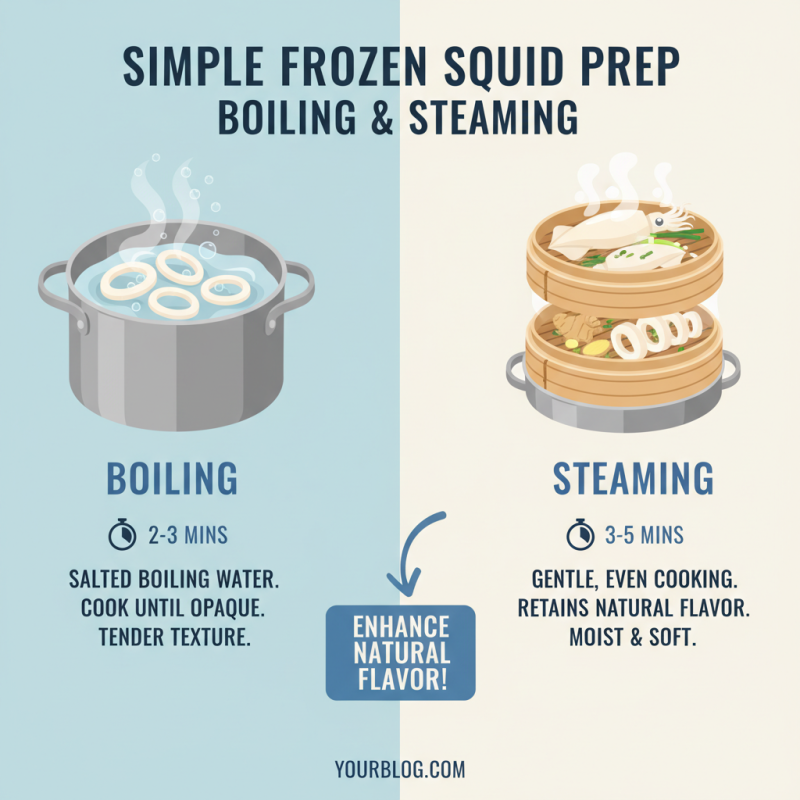
Basic Cooking Techniques for Frozen Squid: Boiling and Steaming
When it comes to preparing frozen squid, two of the simplest yet most effective techniques are boiling and steaming. These methods highlight the natural flavor and texture of squid, allowing it to shine in various dishes. Boiling is particularly useful for quick meals; simply bring salted water to a boil, add the cleaned squid, and cook for 2-3 minutes until they turn opaque. This method not only cooks the squid evenly but also helps to minimize any rubbery texture, making it tender.
Steaming, on the other hand, is perfect for retaining the moisture and preserving the delicate flavor of squid. Set a steamer over boiling water, place the squid in the basket, and cover it for about 5-7 minutes. The gentle cooking process allows the squid to become succulent while absorbing the aromatic steam from herbs or spices added to the water. According to a report by the Food and Agriculture Organization, steaming preserves more nutrients compared to boiling, making it a healthier choice.
**Tips:** To enhance the taste, consider adding aromatics like garlic, ginger, or lemongrass to the steaming water. Additionally, if you prefer a firmer texture, soak your frozen squid in cold water for about 30 minutes before cooking. This helps achieve the perfect bite while still being easy to prepare. Pair your boiled or steamed squid with a light dipping sauce for a delightful appetizer or incorporate it into salads and pasta for a satisfying meal.
Flavorful Marinades to Enhance Frozen Squid Dishes
Marinades play a crucial role in enhancing the flavor of frozen squid, transforming a simple dish into a culinary delight. According to a report by the Seafood Nutrition Partnership, seafood is a powerhouse of nutrients, with squid being rich in protein and low in calories. This makes it an excellent choice for health-conscious consumers. By utilizing flavorful marinades, you can elevate frozen squid dishes to new heights, infusing them with distinctive tastes that complement its naturally mild flavor.
Common ingredients used in marinades include citrus juices, soy sauce, garlic, and various herbs and spices. A study from the Journal of Food Science reveals that the acid in citrus not only tenderizes the squid but also helps to release its natural flavors, making it more appealing. For instance, marinating squid in a mixture of lime juice, garlic, and olive oil for at least 30 minutes can substantially enhance its taste and texture. Recommendations suggest that marinating for up to an hour can yield optimal results without overpowering the squid's inherent flavors. In addition, incorporating a touch of chili or ginger can bring a significant kick that pairs beautifully with the seafood, satisfying a spectrum of taste preferences.
Quick Stir-Fry Recipes Using Frozen Squid
Cooking with frozen squid can be a delightful way to prepare quick and tasty meals, especially when you want something simple yet flavorful. One of the best methods to enjoy frozen squid is through stir-frying, which allows you to retain its tender texture while infusing it with vibrant flavors. To get started, simply thaw the squid under cold water, slice it into rings or leave it whole, depending on your preference, and drain any excess moisture to achieve the perfect sear.
For a quick stir-fry, heat a wok or large skillet over medium-high heat and add a splash of oil. Once the oil is hot, toss in aromatic ingredients like minced garlic, ginger, or sliced chili to create a fragrant base. Next, add your squid and stir-fry for about 2-3 minutes until it turns opaque. To elevate your dish, incorporate a medley of colorful vegetables such as bell peppers, snap peas, and carrots. Finish with a splash of soy sauce or a drizzle of sesame oil for that extra depth of flavor, and serve your dish over steamed rice or noodles for a satisfying meal that comes together in no time.
Creating Delicious Soups and Stews with Frozen Squid
When it comes to creating delicious soups and stews, frozen squid is an often-overlooked ingredient that can elevate your dishes to new heights. According to industry data, the seafood market has seen a significant shift towards frozen products, with frozen seafood consumption increasing by over 10% in recent years. This trend is largely driven by the convenience and preservation of flavor that frozen squid offers. When thawed properly, frozen squid retains its tender texture and distinct taste, making it a perfect addition to a variety of soup and stew recipes.
Incorporating frozen squid into your meals not only enhances flavor but also boosts nutritional value. A 3-ounce serving of squid is low in calories yet rich in protein, vitamins, and minerals, including vitamin B12 and selenium, making it a heart-healthy choice. For instance, a simple seafood stew can be crafted by combining thawed squid with fresh vegetables, herbs, and a flavorful broth. The quick cooking time of squid ensures that it complements the dish without becoming rubbery, a common mistake when not handling this seafood properly. Utilizing frozen squid can streamline your cooking process while still allowing for gourmet results, proving that convenience doesn’t have to compromise taste or quality.