Inquiry
Form loading...

How to Cook Frozen Squid from China Top Suppliers?

Cooking Frozen Squid well begins before the pan gets hot. Frozen squid from Chinese suppliers can arrive as whole tubes, rings, or tentacles, with different sizes, glazing levels, and thawing needs. Check the product specification and package instructions; do not assume that frozen means cleaned or ready to cook. The FAO’s 2024 State of World Fisheries and Aquaculture report estimated global aquatic animal production at 185.4 million tonnes in 2022. That figure covers many species, not squid alone, so it provides supply-chain context rather than a measure of squid quality. For buyers and home cooks, traceable origin, intact packaging, and consistent sizing matter more than a broad market statistic.

The cooking rule is simple. The details are not. Chef Rick Stein’s often-cited advice is to cook squid “very quickly or very slowly.” For tender rings, thaw them safely in the refrigerator, pat them dry, and cook briefly in a properly heated pan. For a braise, allow enough time for the texture to soften. The FDA’s seafood guidance recommends cooking seafood to 145°F (63°C); follow the product label and use a food thermometer when appropriate. A crowded pan can release water and leave the squid rubbery, even when the timing seems right. That part is easy to miss. In this guide, Cooking Frozen Squid means handling the product carefully, choosing a method that fits its cut, and checking doneness—not trusting appearance alone.
How to Cook Frozen Squid from China Top Suppliers?

How to Identify and Select Frozen Squid from Chinese Suppliers

When evaluating frozen squid from Chinese suppliers, request the scientific species name, catch area, harvest date, processing site, and lot code. Match these details across the specification sheet, carton label, and health or inspection documents. FAO’s The State of World Fisheries and Aquaculture 2024 reports 185.4 million tonnes of global aquatic animal production in 2022. That figure covers all aquatic animals, not squid alone, but it shows why product-level traceability matters.

Inspect a sample carton before agreeing to a shipment. Squid should be hard-frozen, with intact packaging and no heavy frost, leaking, or yellowing. Check the declared net weight and glazing percentage; excess surface ice can disguise the actual seafood quantity. Appearance is not enough. Ask for size grading, processing details, and recent test results relevant to the product, such as microbiological and contaminant checks. A weak point sometimes remains: paperwork may look complete while lot codes fail to match.

Review temperature records from processing through storage and transport. Codex’s Code of Practice for Fish and Fishery Products specifies frozen storage at −18°C or colder. Confirm the supplier can provide records, not just a verbal assurance. Clarify whether the squid was frozen at sea or on shore, and agree in writing on acceptable defect levels and thawing tests. A small trial order helps reveal inconsistent sizing or excess glaze, though it cannot guarantee every later lot will be identical.

How to Thaw Frozen Squid Safely

How to Cook Frozen Squid from China Top Suppliers?

How to Thaw Frozen Squid Safely

Keep frozen squid solid until you are ready to thaw it. Check that the package is sealed and has no tears or signs of leakage. If it is heavily coated with ice, that can indicate temperature changes, though it does not prove the squid is unsafe. Follow any storage instructions on the package.

For the safest, most even thaw, place the squid in a leakproof container on the bottom shelf of your refrigerator, set at 4°C (40°F) or colder. Small portions may thaw overnight; larger blocks can take longer. Timing varies, so check the center rather than guessing. Keep it cold. Never thaw squid on the counter, where the surface can warm while the middle stays frozen.

Short on time? Keep the squid sealed in a leakproof bag and submerge it in cold tap water. Change the water every 30 minutes, then cook the squid promptly. A microwave can also thaw it, but uneven warming is common; cook it immediately afterward. Wash hands and clean surfaces after handling raw seafood. I would not rush a partly frozen block with warm water—the texture may suffer, and the thaw can become uneven. Once thawed, drain it and pat it dry before cooking.

How to Thaw Frozen Squid Safely

Key food-safety temperature benchmarks for thawing and cooking squid.

Safe thawing: Thaw squid in a refrigerator kept at or below 4°C (40°F). Alternatively, thaw it in a sealed package under cold water, or use a microwave and cook immediately. Do not thaw at room temperature. Cook seafood to an internal temperature of 63°C (145°F).

How to Clean and Prepare Squid for Cooking

How to Cook Frozen Squid from China Top Suppliers?
How to Clean and Prepare Squid for Cooking

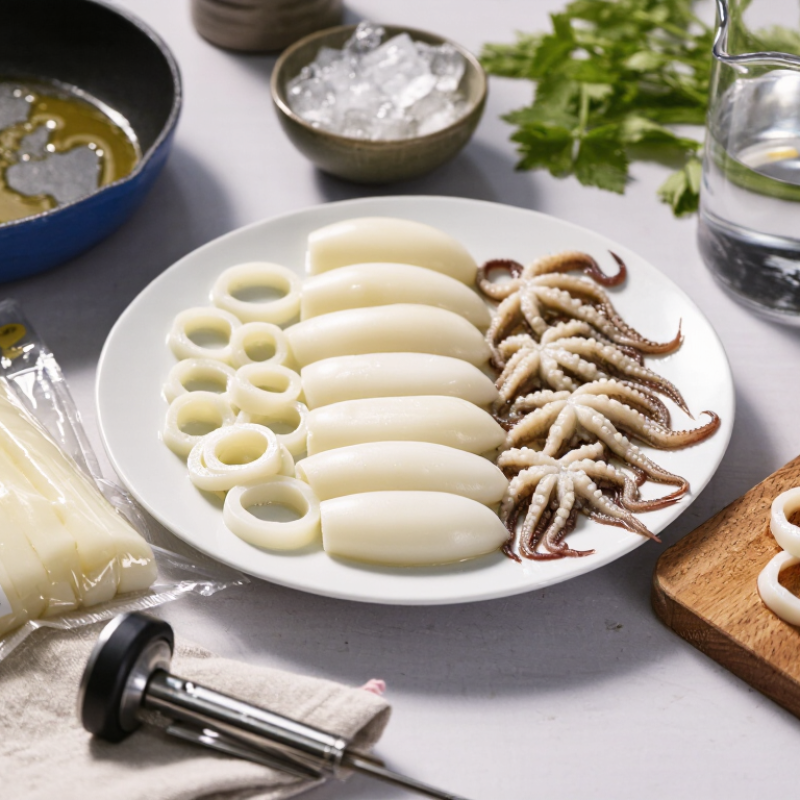
Thaw frozen squid overnight in the refrigerator, or keep it sealed and place it in cold water. Never leave it on the counter. Once thawed, separate the head from the body and remove the clear, feather-shaped quill and innards. Pull away the thin purple outer skin if you prefer a pale, tender-looking tube. Remove the beak from the center of the tentacles. Rinse briefly under cold running water, then pat everything dry. A slippery membrane can hide near the fins; take another look before cutting.

Good preparation matters across a vast seafood supply chain. The FAO’s The State of World Fisheries and Aquaculture 2024 reports that aquatic animal production reached 185.4 million tonnes in 2022, with 89% used for direct human consumption. Those figures cover many species, not squid alone, but they underline why careful handling matters. Slice the body into rings or score it lightly, then cook quickly over high heat, or gently for longer. The middle ground can turn rubbery.

Tips: Keep cleaned squid chilled while you work, and use a separate board for raw seafood. Dry surfaces help squid sear instead of steaming. I still find tiny bits of skin after cleaning sometimes; a final inspection is worth the extra moment.

How to Cook Frozen Squid from China Top Suppliers? - How to Clean and Prepare Squid for Cooking
Stage What to Do Practical Details Why It Matters
Check the package Read the product label and confirm whether the squid is whole, cleaned, or cut into rings or pieces. Follow the package directions if they differ, especially for individually quick-frozen or pre-cooked products. Preparation needs vary depending on how much cleaning has already been done.
Thaw safely Thaw in the refrigerator overnight, or place the sealed squid in cold water and change the water every 30 minutes. Keep squid cold while thawing. Do not thaw it on the counter or in warm water. Cold thawing helps limit bacterial growth and preserves quality.
Drain and rinse Drain thawed squid and briefly rinse it under cold running water. Pat dry with clean paper towels before cutting or cooking. Removing excess moisture helps squid brown rather than steam.
Clean whole squid Gently pull the head and tentacles away from the body. Remove the clear, plastic-like quill from inside the body and discard the internal organs. Cut the tentacles just below the eyes; remove the hard beak from the center of the tentacles. Discard the beak and entrails. The quill, beak, and entrails are not normally eaten.
Remove skin if desired Peel away the thin, mottled outer membrane from the body and rinse again. The skin is edible; removing it is optional and mainly changes the appearance and texture. Cleaning can be adjusted to the recipe and personal preference.
Cut for the recipe Slice cleaned bodies into rings, or score larger pieces in a shallow crosshatch pattern. Keep pieces similar in size so they cook evenly. Leave small tentacles whole. Evenly sized pieces are easier to cook without overcooking some portions.
Quick-cook method Cook in a very hot pan, on a grill, or in boiling liquid for a short time. Thin rings and small pieces often need about 1–2 minutes per side in a hot pan; timing varies with size and equipment. Brief cooking helps keep squid tender. Avoid crowding the pan, which can lower its temperature.
Slow-cook method Braise squid gently in sauce or other cooking liquid until tender. Allow roughly 30–45 minutes as a starting point, then check tenderness; larger pieces may take longer. Squid can also become tender with longer, gentle cooking; the exact time depends on size and method.
Check doneness Cook until the squid is opaque and hot throughout. For a temperature check, the thickest part should reach 145°F (63°C). Use a food thermometer when practical, especially for larger pieces. Doneness checks help ensure seafood is thoroughly cooked.
Serve and store Serve promptly after cooking. Refrigerate leftovers in a covered container within 2 hours. Keep the refrigerator at 40°F (4°C) or below and use refrigerated leftovers within 3–4 days. Prompt chilling and cold storage help keep leftovers safe.

How to Choose a Cooking Method for Squid

How to Cook Frozen Squid from China Top Suppliers?
How to Choose a Cooking Method for Squid

Choose the method by the squid’s cut, thickness, and final use. Rings and small pieces suit quick frying, while whole tubes work well on a hot grill or in a gentle braise. Check the package directions, since frozen squid may arrive cleaned, seasoned, or packed with extra moisture. Thaw it in the refrigerator, then drain and pat it dry. Wet squid tends to steam instead of brown. Keep the pieces similar in size for more even cooking. Small details matter.

For a tender, quick meal, cook rings briefly in a very hot pan, turning them once. For a softer texture, simmer thicker pieces gently in sauce until tender; timing varies with size. Avoid leaving squid over medium heat for too long, where it can become chewy. If using a food thermometer, cook seafood to 145°F (63°C). A small test batch is useful, because pan heat and squid thickness can change the result. The first attempt may need adjustment.

Tips: Cook from fully thawed squid for more even results. Dry the surface well, and avoid crowding the pan. If liquid pools, cook in smaller batches. Serve promptly with lemon, herbs, or a light sauce.

How to Cook Squid Until Tender and Safe to Eat

Thawing & preparation
Frozen squid from reputable suppliers may arrive as rings, tubes, or whole cleaned pieces. Keep it cold while thawing: leave it in the refrigerator overnight, or seal it in a bag and place it in cold water. Change the water every 30 minutes, and cook the squid promptly after thawing. Never thaw it on the counter. Check the package for cleaning instructions, then pat the pieces dry; excess moisture can make them steam instead of sear. Keep it cold.

Cooking for tender squid
For tender squid, choose either a very quick cook or a gentle, longer one. Sear small batches in a hot pan for about one to two minutes, turning once, until opaque. Or simmer gently in sauce for roughly 30 to 45 minutes, checking the texture as it softens. A thermometer should show 145°F (63°C) at the thickest part for food safety. Don’t crowd the pan; I’ve seen that tempting shortcut leave squid watery and chewy. Timing varies with thickness, so check a piece rather than trusting the clock alone. Slightly imperfect rings are still useful—just cook them evenly.